Have you ever had that uneasy feeling that something wasn’t quite right with your dog—even though you couldn’t explain why? Maybe they skipped a meal, slept longer than usual, or just weren’t as excited to greet you at the door. It’s easy to brush off these little changes and assume they’ll be back to normal tomorrow. But sometimes, those small differences are your dog’s earliest way of telling you they’re not feeling well.
The truth is, dogs are incredibly good at hiding pain and illness. It’s a natural survival instinct, which means many health problems can quietly develop before obvious symptoms appear. That’s why noticing subtle changes in your dog’s behavior, appetite, energy level, or daily routine can make a huge difference.
The good news? You don’t need to be a veterinarian to spot the warning signs. Knowing what’s normal for your dog—and recognizing when something changes—can help you catch potential health issues early and get the right care before they become serious.
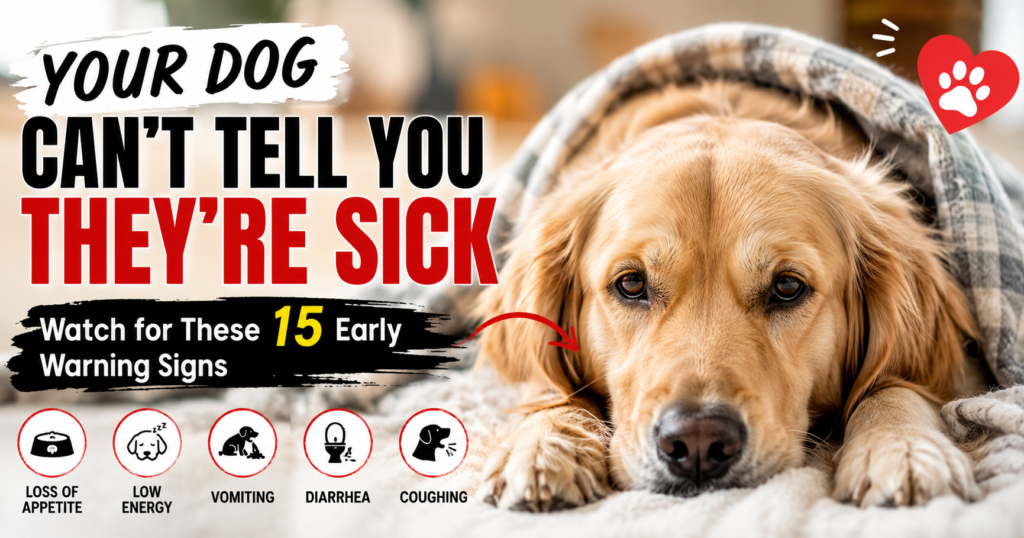
In this guide, we’ll walk you through 15 early warning signs your dog may be sick, explain what each symptom could mean, and help you understand when it’s time to call your veterinarian. A few minutes of reading today could help protect your best friend for years to come.
1. Why Dogs Often Hide Pain and Illness
Dogs are incredibly good at hiding pain. This behavior comes from an instinct that has been with them for a very long time. In the wild, showing weakness could make an animal vulnerable, and that natural instinct still exists in dogs today. Because of this, your dog may not immediately show obvious signs when they’re sick or uncomfortable Instead, the first clues can be surprisingly small.
Maybe your normally food-obsessed Labrador suddenly skips breakfast. Perhaps your energetic Border Collie would rather sleep all day, or your senior Golden Retriever isn’t nearly as excited about their daily walk anymore. These changes can be easy to dismiss as your dog simply having an “off day,” but sometimes they’re among the earliest warning signs that something isn’t right.
That’s why knowing your dog’s normal routine is so important. Pay attention to how much they usually eat, drink, play, and sleep. When you know what’s normal for your dog, you’re much more likely to notice when something changes.
You don’t have to be a veterinarian to notice these little differences. Sometimes, simply paying closer attention to your dog’s everyday behavior can help you recognize a potential problem before the symptoms become more obvious.
Why Recognizing Early Symptoms Can Save Your Dog’s Life
When it comes to your dog’s health, small changes can matter more than you might think. A little less energy, an unusual cough, a change in appetite, or unexpected weight loss may not seem serious at first. But these subtle changes can sometimes be the earliest clues that something isn’t right.
The problem is that waiting for symptoms to become severe can mean waiting too long. Since dogs don’t always show obvious signs when they’re sick, paying attention to their everyday habits can help you notice a potential problem sooner.
Think about what “normal” looks like for your dog. How much do they usually eat and drink? Are they excited for walks? How much do they sleep? Are their bathroom habits normal? When you know these little details, unusual changes become much easier to spot.
Early detection matters because the sooner a health problem is identified, the better the chances of successful treatment.
So, if your dog suddenly isn’t acting like themselves, don’t automatically ignore it. Sometimes the smallest change is the first sign that your best friend needs a little extra attention—and possibly a call to your veterinarian.
What You’ll Learn in This Guide
Knowing when your dog isn’t feeling well isn’t always easy. Some symptoms may simply need a little monitoring at home, while others can be a sign that your dog needs veterinary care right away. That’s exactly what this guide will help you understand.
We’ll walk through 15 early warning signs every dog owner should know, including sudden loss of appetite, unusual tiredness, repeated vomiting, diarrhea, changes in drinking or bathroom habits, persistent coughing, breathing problems, skin issues, limping, and sudden changes in behavior.
You’ll also learn which symptoms shouldn’t be ignored and when it’s time to contact a veterinarian instead of waiting to see if your dog gets better. We’ll cover serious warning signs—such as difficulty breathing, seizures, collapse, severe bleeding, a swollen abdomen, suspected poisoning, and trouble urinating—that may require immediate veterinary attention.
Most importantly, this guide will help you become more aware of your dog’s everyday habits. Because when you know what’s normal for your dog, it’s much easier to recognize when something has changed—and take action when they need you most.
2. Sudden Loss of Appetite
Most healthy dogs don’t usually turn down a meal, especially if they’re normally waiting by the bowl before you even open the food bag. So when your dog suddenly sniffs their food and walks away—or takes only a few bites and loses interest—it’s worth paying attention.
A decreased appetite can happen for several reasons. Your dog may have an upset stomach, dental pain, a fever, an infection, or even be dealing with stress. Sometimes the cause is minor, but loss of appetite can also be connected to more serious problems involving the digestive system, liver, or kidneys.
Why Dogs Stop Eating
Not every missed meal means your dog is seriously sick. If they skip one meal but are still drinking water, playing, and behaving normally, you can keep a close eye on them for the next several hours.
What’s more concerning is when refusing food is completely out of character or happens alongside other symptoms.
When a Missed Meal Is Serious
If your dog refuses food for more than 24 hours, or you notice vomiting, diarrhea, or extreme tiredness along with the loss of appetite, it’s time to contact your veterinarian.
What You Should Do First
Don’t try to force-feed your dog. Instead, make sure fresh water is available and watch closely for any additional symptoms.
You know your dog’s eating habits better than anyone. If they’re usually excited about every meal and suddenly want nothing to do with their food, that change deserves your attention.
What You Should Do First
If your dog suddenly skips a meal, don’t panic—but don’t ignore it either. Start by watching how they’re behaving overall. Are they still drinking water? Do they want to play? Are they responding to you normally? If everything else seems normal and they’ve only missed one meal, keep a close eye on them for the next several hours.
Most importantly, don’t force-feed your dog. Make sure they have access to fresh water and watch for any new symptoms. Vomiting, diarrhea, or extreme tiredness along with a loss of appetite can be a sign that something more serious is going on.
If your dog continues refusing food for more than 24 hours, it’s time to call your veterinarian. And remember, you know your dog’s normal eating habits best. If something feels unusual—especially when other symptoms appear—it’s better to pay attention than simply assume they’re being picky.
3. Sleeping Much More Than Usual
Dogs love their naps, so seeing your pup curled up on the couch for a few hours usually isn’t anything to worry about. In fact, many adult dogs sleep around 12 to 14 hours a day. But there’s an important difference between normal sleep and unusual lethargy.
If your normally active dog suddenly spends most of the day lying down, doesn’t want to play, or stops greeting you at the door like they usually do, pay attention. Sometimes becoming unusually quiet or tired is one of the ways a dog shows that something isn’t right.
Normal Sleep vs. Unusual Lethargy
The easiest way to spot a problem is to compare your dog’s behavior with what’s normal for them.
Ask yourself: Do they still get excited when you mention a walk? Are they interested in their favorite treats? Do they respond normally when you call their name? Have they been sleeping much more than usual for more than a day?
What Could Be Causing Low Energy?
According to the information in your article, unusual tiredness can be associated with several problems, including infections, dehydration, anemia, heart disease, pain, or internal injuries.
When Should You Call Your Vet?
If your dog continues acting unusually tired, shows little interest in walks or treats, or doesn’t respond the way they normally would, a veterinary visit may be the right next step.
Remember, dogs don’t always cry or whine when something hurts. Sometimes, they simply become quiet.
4. vomiting More Than Once
Almost every dog throws up once in a while. Maybe they ate grass, swallowed their food too quickly, or got into something they weren’t supposed to. A single episode of vomiting isn’t always a reason to panic. But when your dog vomits repeatedly, it’s something you shouldn’t ignore.
Repeated vomiting can be linked to several problems, including food poisoning, intestinal parasites, viral infections, pancreatitis, kidney disease, or even a blockage caused by swallowing a toy or another foreign object.
What Should You Watch For?
Pay attention to how often your dog is vomiting and what the vomit looks like. Those details can help you recognize when the situation may be more serious.
Contact your veterinarian immediately if you notice blood in the vomit, continuous vomiting, a swollen abdomen, extreme weakness, difficulty breathing, or vomiting along with diarrhea. These symptoms may indicate a medical emergency.
What Should You Avoid Doing?
It can be tempting to reach into your medicine cabinet when your dog isn’t feeling well, but don’t give them over-the-counter human medications unless your veterinarian specifically tells you to.
Some medications that are safe for people can be toxic to dogs. Instead of trying to treat repeated vomiting on your own, contact your veterinarian for guidance—especially if other warning signs are present.
5. Diarrhea That Doesn’t Go Away
An occasional loose stool isn’t unusual in dogs. A sudden diet change, table scraps, or a mild stomach upset can sometimes cause temporary diarrhea. But if your dog’s diarrhea lasts more than a day, it’s worth paying closer attention.
Watch for warning signs such as blood in the stool, black or tar-like stool, vomiting, fever, dehydration, weakness, or refusal to eat. Puppies, senior dogs, and smaller breeds can become dehydrated more quickly, making ongoing diarrhea especially concerning.
Keep fresh water available to help your dog stay hydrated. If they can’t keep water down, become increasingly weak, or the diarrhea continues, contact your veterinarian as soon as possible.
6. Changes in Drinking Habits
Changes in your dog’s drinking habits can be an early sign that something isn’t right. If your dog suddenly starts emptying the water bowl more often, it could be linked to conditions such as diabetes, kidney disease, or Cushing’s disease.
Drinking much less than usual can also be concerning, especially after vomiting, diarrhea, or during hot weather. Watch for dry or sticky gums, sunken eyes, thick saliva, or weakness, which may indicate dehydration.
If your dog’s water intake changes significantly for more than a day, don’t ignore it. Knowing how much your dog normally drinks makes unusual changes much easier to spot.
7. Sudden Weight Loss or Weight Gain
If your dog suddenly looks thinner despite eating normally—or starts gaining weight without any major diet changes—don’t ignore it. Gradual weight changes can happen as dogs age, but sudden or unexplained weight loss or weight gain may point to an underlying health problem.
Weight loss can be associated with diabetes, kidney or liver disease, intestinal parasites, digestive disorders, or cancer. Unexpected weight gain may be linked to hypothyroidism, hormonal imbalances, overfeeding, lack of exercise, or certain medications.
Make a habit of checking your dog’s body condition regularly. If you notice a significant change in their weight over a few weeks, schedule a veterinary exam rather than changing their diet on your own.
8. Persistent Coughing
Dogs may cough occasionally after drinking water too quickly, but a cough that doesn’t go away deserves attention. Persistent coughing can sometimes be linked to kennel cough, allergies, heart disease, tracheal collapse, lung infections, or pneumonia.
Pay attention to when your dog coughs—after exercise, at night, during excitement, or throughout the day. These details can help your veterinarian determine what may be causing it.
If coughing is accompanied by difficulty breathing, weakness, or blue-colored gums, seek emergency veterinary care immediately.
9. Trouble Breathing
Difficulty breathing in dogs is a serious warning sign and shouldn’t be ignored. If your dog is breathing rapidly while resting, panting heavily without exercise, wheezing, breathing with an open mouth, or stretching their neck to breathe, they may need immediate veterinary attention.
Breathing problems can be linked to heart or lung disease, allergic reactions, heatstroke, or an airway blockage. Blue, gray, or unusually pale gums are another major red flag.
Because breathing problems can quickly become dangerous, treat them as an emergency. Keep your dog calm, limit unnecessary activity, and get them to a veterinary clinic as soon as possible.
10. Changes in Bathroom Habits
Your dog’s bathroom habits can reveal a lot about their health. If they’re suddenly asking to go outside more often, having accidents indoors, or struggling to urinate or poop, don’t simply assume it’s because of age.
Watch for warning signs such as frequent urination, straining to urinate, blood in the urine, constipation, blood in the stool, or black, tar-like stool. These changes may be linked to urinary tract infections, bladder stones, kidney disease, or digestive problems.
If your dog repeatedly tries to urinate but nothing comes out, seek emergency veterinary care immediately. A urinary blockage can become life-threatening within hours.
11. Bad Breath and Oral Health Problems
A little “dog breath” may seem normal, but persistent bad breath in dogs can sometimes signal an oral health problem. Gum disease, tooth infections, broken teeth, and other health conditions may all cause unusually foul-smelling breath.
Check your dog’s mouth regularly for red or pale gums, tartar buildup, excessive drooling, or bleeding. Healthy gums should normally look pink. Good dental care matters because untreated dental disease can allow bacteria to enter the bloodstream and potentially affect other organs.
Regular tooth brushing and professional dental cleanings can help reduce the risk of serious oral health problems.
12. Constant Scratching, Hair Loss & Skin Problems
A little scratching is normal, but constant itching, excessive licking, or sudden hair loss in dogs can signal an underlying problem. Common causes include fleas or ticks, food allergies, seasonal allergies, skin infections, dry skin, or hormonal disorders.
Take a closer look if you notice red or irritated skin, bald patches, scabs, hot spots, a strong skin odor, or constant paw licking. These problems can become worse if left untreated.
Regular grooming can also help you spot lumps, bumps, rashes, and parasites early. If your dog’s itching or hair loss continues or gets worse, have your veterinarian check the cause.
13. Limping or Trouble Walking
If your dog suddenly starts limping, walking slowly, or struggling to stand up, don’t assume they’re simply getting older. Changes in movement can be a sign that your dog is experiencing pain.
Watch for behaviors like avoiding stairs, refusing to jump on the couch, holding one paw off the ground, crying when touched, or losing interest in walks. Possible causes include arthritis, muscle injuries, torn ligaments, hip dysplasia, or even a small object stuck in the paw.
Until your veterinarian identifies the cause, avoid long walks or vigorous exercise. Giving your dog time to rest can help prevent further injury or discomfort.
14. Red Eyes or Smelly Ears
Healthy eyes should normally look bright and clear, while healthy ears should be clean and free from strong odors. If your dog’s eyes suddenly become red, cloudy, or watery, it could point to an infection, injury, allergies, or another health problem.
For the ears, watch for frequent head shaking, scratching, bad smells, thick brown or yellow discharge, or swelling. Dogs with floppy ears, such as Cocker Spaniels and Basset Hounds, may be especially prone to ear infections.
Never insert cotton swabs deep into your dog’s ears. If you suspect an eye or ear infection, have your veterinarian examine your dog before trying medication at home.
15. Sudden Changes in Behavior
Sometimes the first sign that your dog is sick isn’t physical—it’s a sudden change in behavior. You know your dog’s personality better than anyone, so if they suddenly start acting completely different, pay attention.
A normally friendly dog may become withdrawn, while an energetic dog might start hiding or lose interest in playing. Watch for signs like unusual aggression, confusion, restlessness, whining, excessive clinginess, hiding, or loss of interest in toys and family members.
Dogs may also behave differently when they’re in pain. If these personality changes appear suddenly or continue, consider having your dog evaluated by a veterinarian.
When Should You Call a Veterinarian Immediately?
Some symptoms are simply too serious to monitor at home. If your dog suddenly looks very sick or their condition is getting worse quickly, getting professional veterinary care right away can be critical.
Seek emergency veterinary care if your dog has difficulty breathing, a seizure, collapses or loses consciousness, repeated vomiting that won’t stop, bloody diarrhea, a swollen or bloated abdomen, severe bleeding, suspected poisoning, trouble standing or walking, or signs of heatstroke.
Another serious emergency is when your dog repeatedly tries to urinate but nothing comes out. A urinary blockage can become life-threatening and shouldn’t be ignored.
Most importantly, trust your instincts. You know your dog’s normal behavior better than anyone. If they look seriously ill or something simply feels wrong, it’s safer to contact a veterinarian rather than wait for the symptoms to get worse.
FAQ
How do I know if my dog is sick or just tired?
A tired dog usually feels better after rest. If your dog stays unusually sleepy and also has loss of appetite, vomiting, diarrhea, weakness, pain, or behavior changes, they may be sick. If symptoms last over 24 hours or seem severe, contact your veterinarian.
Is it normal for a dog to skip a meal?
Some dogs occasionally skip a meal, especially during hot weather or after a stressful event. However, if your dog refuses food for more than a day or develops other symptoms, it’s a good idea to have them examined by a veterinarian.
What are the first signs that a dog may be sick?
Early signs can include loss of appetite, low energy, changes in drinking habits, or suddenly acting differently than usual. Knowing your dog’s normal routine makes these subtle changes easier to recognize.
Can a sick dog recover at home?
Some mild stomach upsets may improve with rest and hydration. However, persistent vomiting, diarrhea, breathing problems, or signs of pain should be evaluated by a veterinarian rather than treated at home.
When should I take my dog to an emergency vet?
Seek immediate veterinary care for serious symptoms such as difficulty breathing, seizures, collapse, severe bleeding, repeated vomiting, bloody diarrhea, a bloated abdomen, suspected poisoning, heatstroke, or inability to urinate.
Final Thoughts
Dogs have a funny way of becoming part of our everyday lives. We notice when they’re waiting by the food bowl five minutes early, when they hear the word “walk” from across the room, and when they somehow know exactly when we need a little extra company.
That familiarity is also one of the best tools you have for protecting their health.
You don’t need to memorize every possible dog illness or panic over every skipped meal. What matters is noticing when your dog stops acting like your dog. A sudden loss of appetite, unusual tiredness, repeated vomiting, changes in bathroom habits, or a personality shift may be their quiet way of telling you something isn’t right.
Some symptoms will pass, while others deserve a call to your veterinarian. And when you see serious warning signs—especially difficulty breathing, collapse, seizures, severe bleeding, or suspected poisoning—getting veterinary help quickly matters.
So keep watching the little things. Know your dog’s normal habits, stay consistent with preventive care, and trust yourself when something feels unusual.
Your dog may not be able to tell you they’re sick, but if you’re paying attention, they can still tell you a lot.